
AI can remove hours of unnecessary work. It can also remove the effort through which people develop expertise. Knowing the difference is becoming an important management responsibility.
A junior analyst produces a polished recommendation in minutes. The evidence is neatly arranged, the language is confident and the conclusion appears reasonable.
For the manager, the immediate benefit is obvious. Work that once took an afternoon is ready before the next meeting.
The harder question comes during the discussion: can the analyst explain why the recommendation is sound, recognise what is missing and defend it when the circumstances change?
The document may be better. Whether the analyst is becoming more capable is a separate question.
In a GoodFellows discussion hosted by the Hoover Institution, computer scientist and author Cal Newport raises this distinction in relation to education. His argument has wider implications for businesses adopting AI: completing a task and developing the ability to perform it are different outcomes.
Organisations need to pay attention to both.
The work produces more than an output
Newport’s educational argument is straightforward. An assignment is useful partly because of the mental effort required to complete it. Reading, weighing evidence and constructing an argument are how students practise thinking.
If a tool completes the assignment on their behalf, the visible output can improve while the learning opportunity disappears.
The same tension can arise at work.
Preparing a proposal teaches someone to understand a customer’s situation. Investigating a discrepancy builds familiarity with how a process behaves. Reviewing an unfamiliar case helps a junior employee develop judgement.
This does not justify preserving every manual task. Rekeying information between systems is usually a poor training programme. Searching several disconnected repositories for an approved policy is rarely a good use of expertise.
But organisations should examine what a task contributes before deciding that all the effort involved is waste.
Some work exists because systems are poorly connected. Some work is how people learn to make decisions.
Remove administrative burden without removing understanding
The useful response is to be more precise about what AI should do.
Consider a team preparing a consequential recommendation. AI might retrieve relevant documents, organise the evidence, identify inconsistencies and prepare an initial draft. Those contributions can give the team more time to examine the decision.
The risk arises when the recommendation is accepted because it reads well, rather than because someone has tested its reasoning.
A stronger workflow might require the responsible person to identify the assumptions, examine contradictory evidence and explain the circumstances in which the recommendation would change. AI can assist with those activities too, provided it does not become the sole judge of its own answer.
For a junior employee, the sequence may need to be different. They might first develop a view independently, then use AI to challenge it. An experienced specialist may reasonably delegate more because they already have the knowledge needed to assess the result.
The appropriate level of assistance depends on the task, its consequences and the person doing it.
Newport also makes strong claims about cognitive atrophy. Those claims require careful assessment of the underlying research; the interview alone does not establish the extent or permanence of such effects. Businesses do not need to assume lasting cognitive harm, however, to recognise the practical risk of reducing opportunities to learn and exercise judgement.
Accountability belongs in the design
Newport’s discussion of autonomous agents offers another useful insight. Unwanted behaviour should not be explained away as an inevitable consequence of increasingly capable AI.
Organisations make choices about what a system can access, which actions it can take and how long it can operate without review. Those choices affect the consequences of an error.
An assistant that prepares a customer response is different from a system authorised to send it. A tool that identifies a possible payment discrepancy is different from one permitted to change bank details.
Calling all of these systems “AI agents” hides the real decisions that matter.
Before deployment, a business should be able to explain:
- What the system is authorised to do.
- What evidence it must check before acting.
- Which actions require approval.
- How errors will be detected and contained.
- Who can stop the system and recover the work.
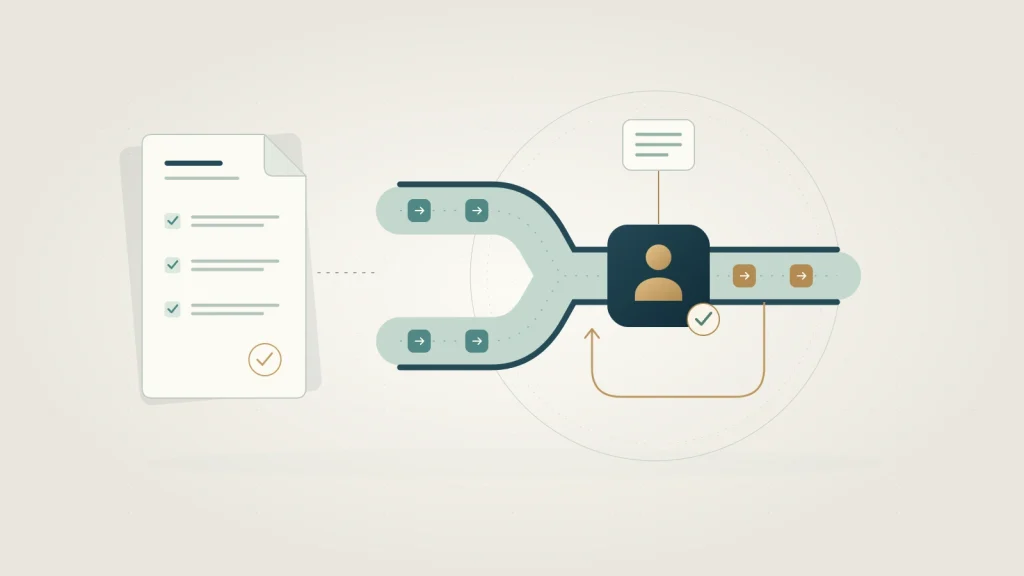
Human review needs equally careful design. A person asked to approve a large volume of plausible outputs, without enough context or time, may provide little protection. Effective oversight requires someone who understands the decision, can inspect the evidence and has genuine authority to intervene.
Policies cannot carry the whole burden
Newport argues that universities cannot rely solely on asking students to resist a tool that makes better grades easier to obtain. The learning environment and assessment process need to support the behaviour the institution expects.
Businesses face a similar problem.
A policy may require careful verification, while performance targets reward only speed. Staff may be told to protect confidential information, yet lack an approved way to get useful assistance. Managers may ask for independent judgement while accepting recommendations without examining their basis.
Under those conditions, a policy document is unlikely to be enough.
The workflow needs to make responsible use practical. That includes access to approved information, clear permissions, proportionate checks and realistic time for review.
Managers also need to demonstrate that identifying an error or questioning an AI-generated answer is useful work, rather than an obstacle to meeting a target.
Measure capability alongside productivity
Faster completion is a useful measure, but it is an incomplete one.
An AI-assisted process may save time at the drafting stage while adding effort to verification, exception handling or repair. It may perform well on routine cases but leave staff less prepared for unusual ones.
A sensible evaluation therefore looks beyond output volume. It examines:
- Quality and rework after human review.
- Performance on unfamiliar or exceptional cases.
- Whether staff can explain consequential decisions.
- Whether less experienced employees are developing competence.
- The team’s ability to continue operating if the AI service is unavailable.
These measures need not become a large governance exercise. A bounded pilot can compare the existing process with an assisted version, using representative cases and agreed limits.
The aim is to establish whether the organisation is gaining dependable capacity, including the capacity to recognise when the system is wrong.
A practical starting point for business leaders
Choose one workflow where AI appears likely to help. Before selecting a tool, separate the activities within it.
Identify the effort caused by duplication, poor information access or disconnected systems. That is a good place to look for elimination, integration or automation.
Then identify where people exercise judgement, develop expertise or accept responsibility. Decide how those activities will work after the change. Some may be assisted; others may need protected opportunities for independent practice.
Finally, test the proposed workflow against both ordinary cases and foreseeable exceptions. Include the cost of review and recovery in the result.
At Semantia, our view is that this distinction should be part of process redesign from the outset. The appropriate intervention might be a simpler process, better access to organisational knowledge, conventional automation or a carefully bounded AI system. Greater autonomy is useful only where it improves the outcome without creating unacceptable exposure.
AI adoption should leave a business better able to perform its work and respond when circumstances change. That requires removing unnecessary effort while preserving the understanding on which dependable performance rests.